Hisaab Sathi
Billing and reconciliation for courier partners,
rebuilt around how logistics teams actually work.

Overview
Hisaab Sathi is an operational and finance automation platform built for courier and logistics channel partners. It replaces spreadsheet based billing, manual invoice generation, and fragmented reconciliation workflows with a unified system designed around the complexities of logistics operations.
The platform brings courier partner billing, rate configuration, customer management, and invoice generation into one place. It is live and serving paying clients, making it a product shaped by real operational requirements rather than assumptions about how logistics businesses work.
The Problem
Courier channel partners manage large volumes of shipment data across spreadsheets, courier portals, and manual accounting workflows. Calculating charges, maintaining partner specific rate charts, generating invoices, and reconciling transactions become increasingly difficult as shipment volumes grow.
Generic accounting software does not adequately address logistics specific requirements such as service channels, package types, travel modes, weight based rate slabs, location specific pricing, and customised billing rules. The challenge was to bring these interconnected workflows into one system without sacrificing the transparency and control users were accustomed to in Excel.
The Approach
I approached Hisaab Sathi as a domain specific operational tool rather than a conventional accounting dashboard. The goal was to make complex billing logic manageable through structured workflows, reusable interface patterns, and clear configuration controls.
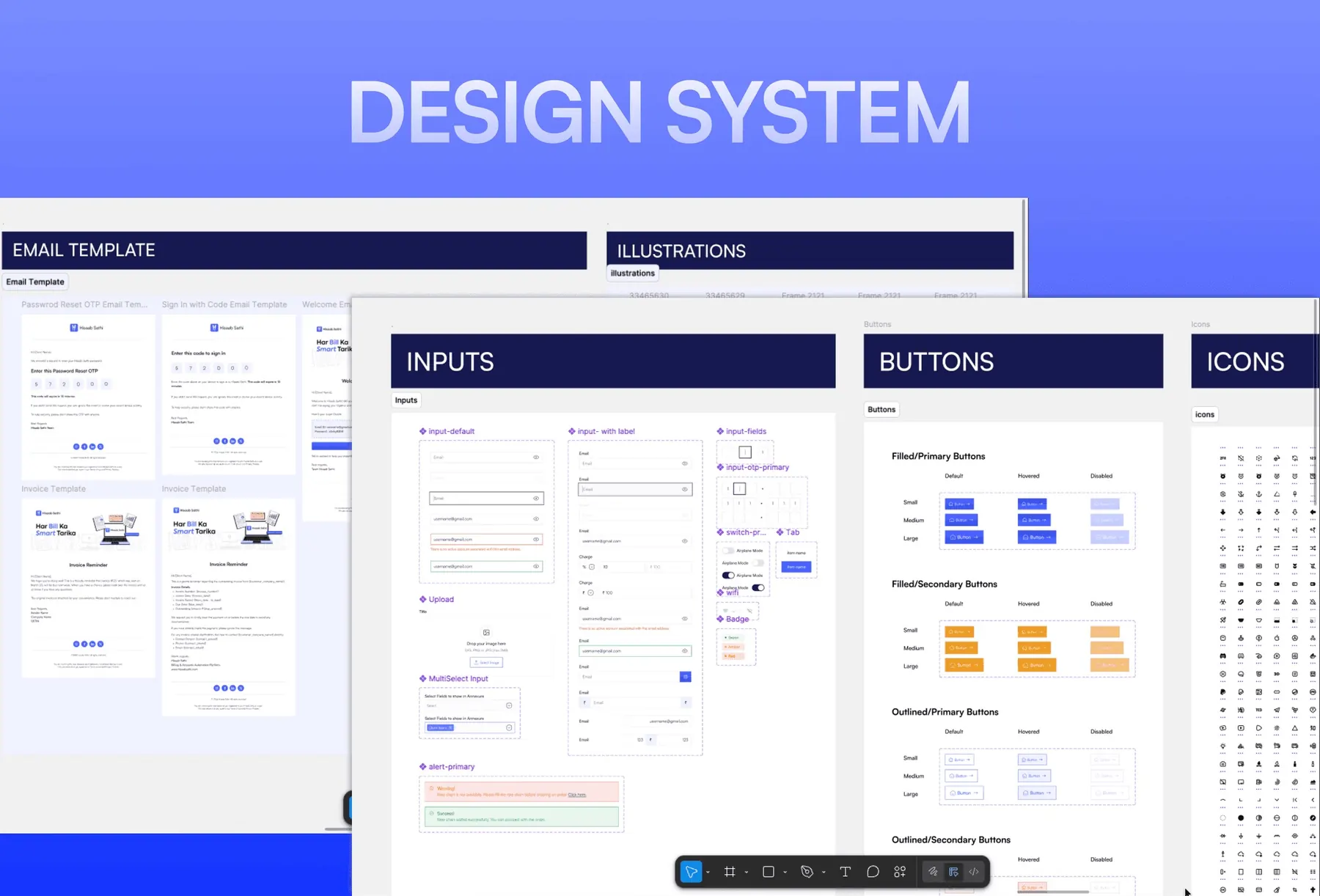
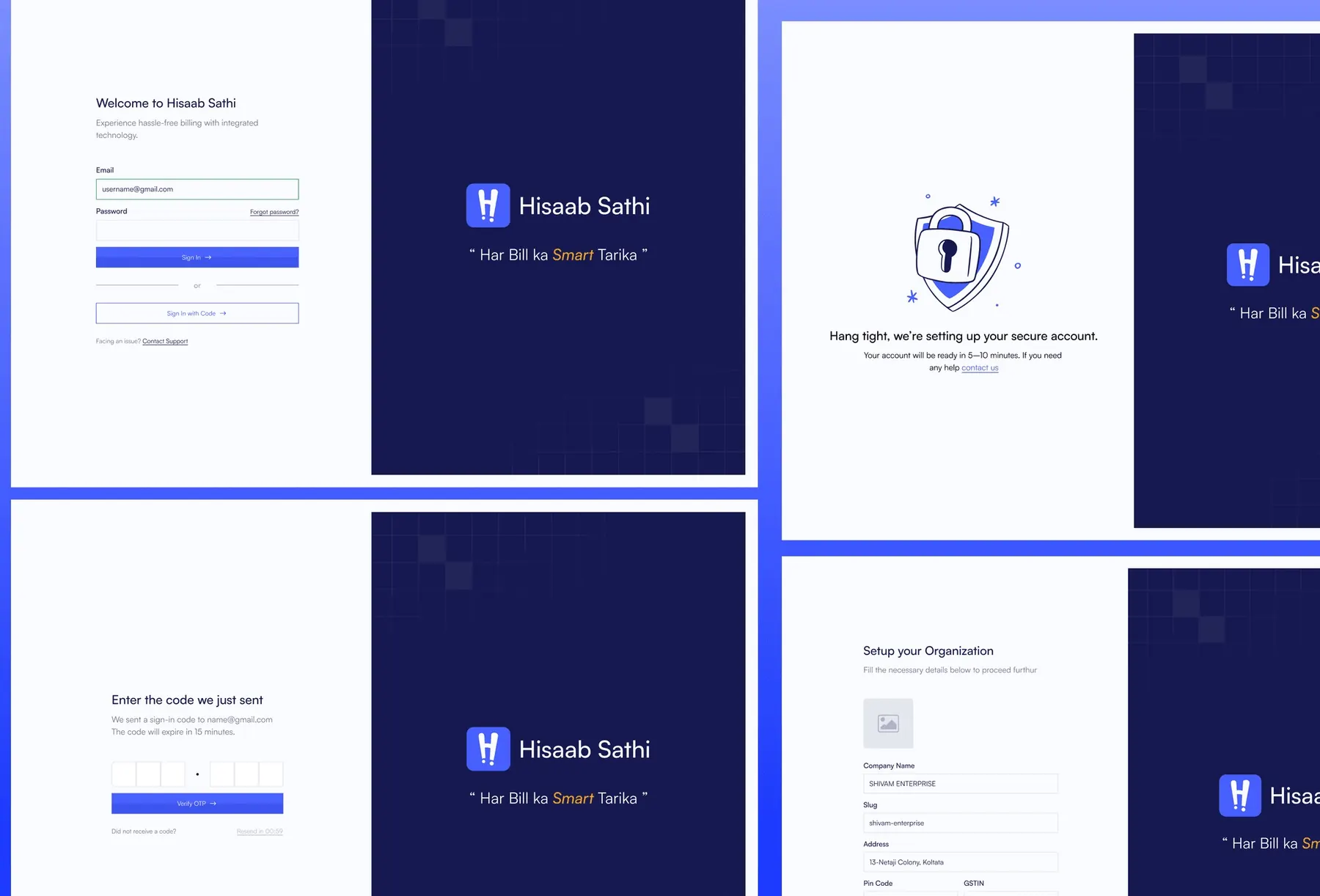
I established a consistent design system for form inputs, buttons, icons, and interface components to maintain visual consistency across the application. The authentication and onboarding experience was structured around account access, verification, and organisation setup, helping users move from registration into the product.
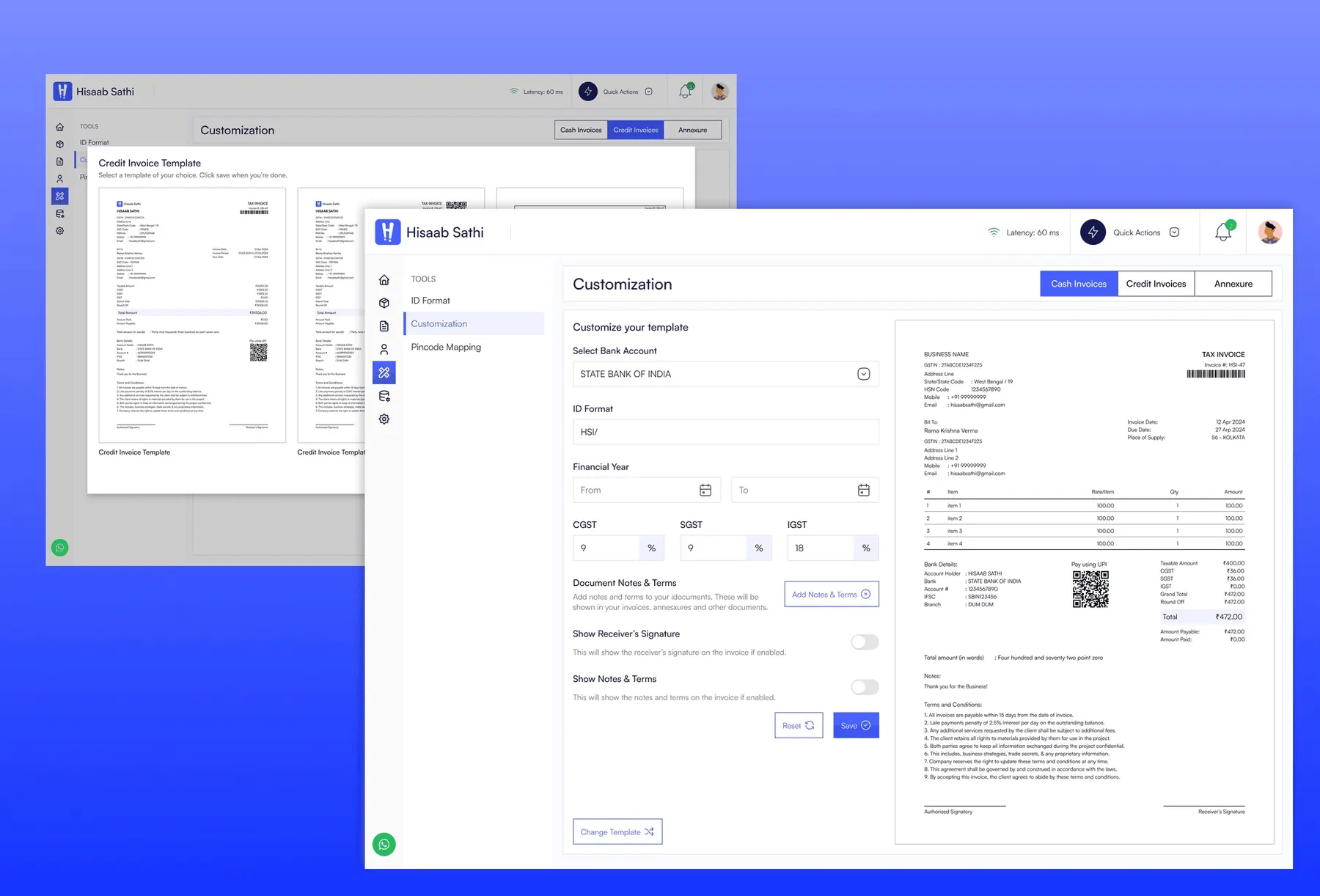
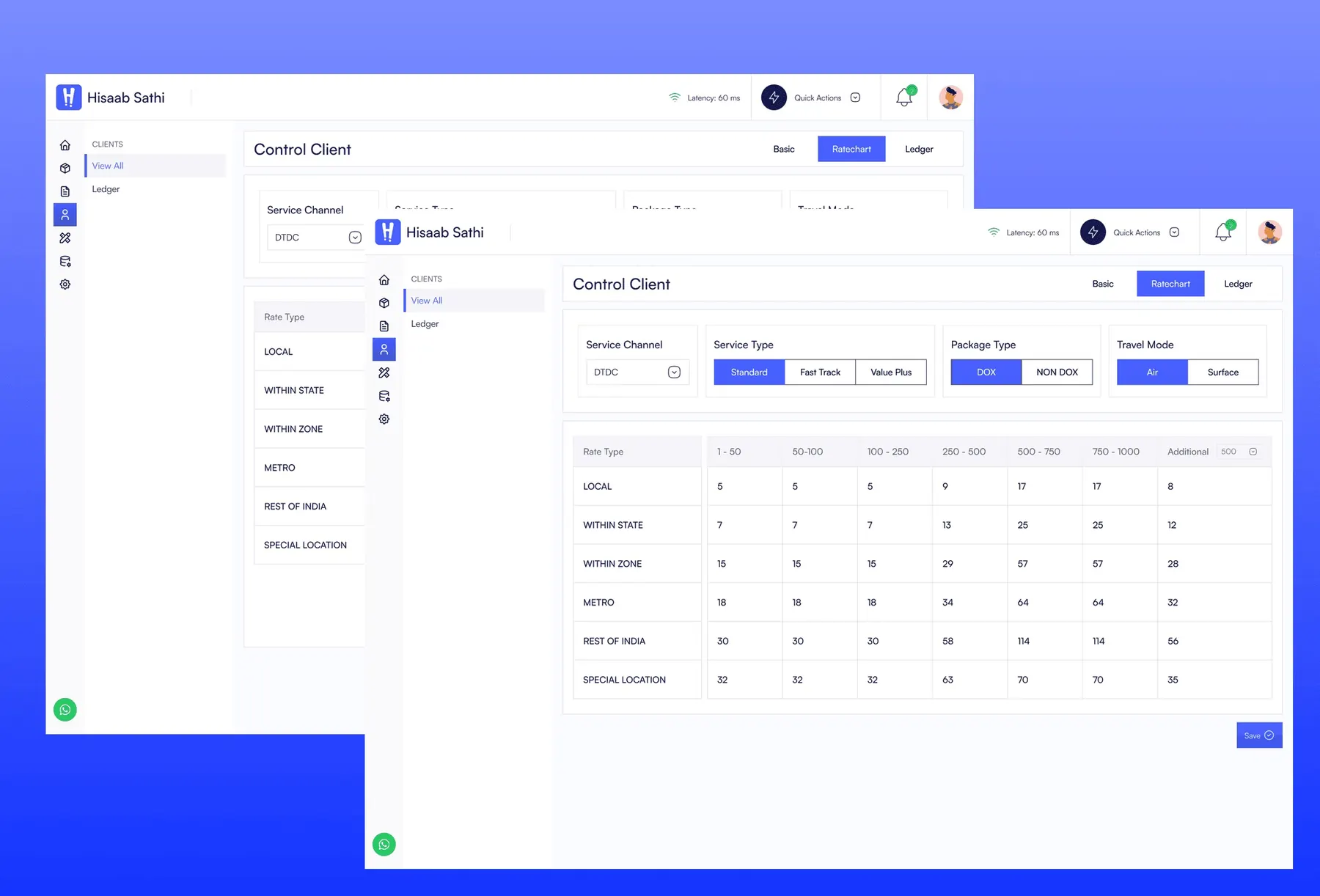
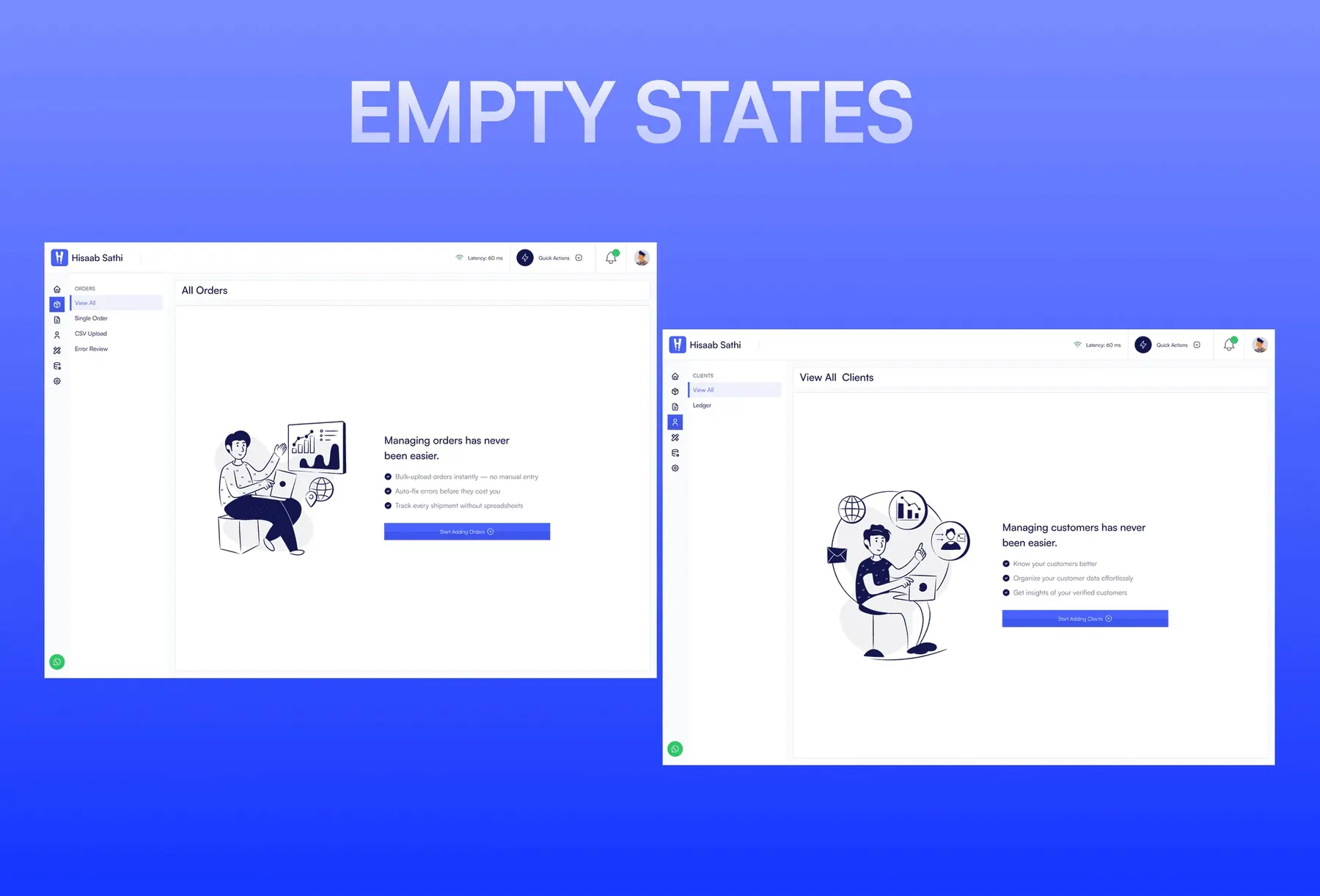
The core billing experience focused on configurable invoice templates and rate charts. Users can manage billing preferences, define service and package configurations, and maintain rate slabs across different locations and weight ranges. Empty states provide contextual guidance when customer or order data is unavailable, helping users understand what is missing and how to proceed.
The Results
- A unified workflow for courier billing, invoice generation, and reconciliation
- Structured rate chart configuration for partner specific pricing and logistics requirements
- A consistent interface system across authentication, onboarding, billing, and configuration screens
- A live product serving paying clients and validating its practical relevance to logistics operations
What I'd Do Differently
I'd spend more time observing accounts teams during month end reconciliation. Reviewing existing spreadsheets helped me understand the underlying workflows, but observing the complete process in practice would have exposed exceptions in rate calculations, credit notes, and transaction reconciliation earlier.
I'd also bring onboarding and bulk data import into the initial design process. Importing shipment and customer data is central to how logistics partners work, so treating it as a foundational workflow from the beginning would have helped reduce friction and avoid later rework.
What I Learned
Domain logic is the design. Rate slabs, service configurations, location based pricing, and credit notes are not secondary details in logistics software. They determine whether the product is useful in real operational conditions.
Replacing Excel means preserving transparency. Users need to understand how every charge is calculated and where every number comes from. Automation only creates value when it remains understandable and trustworthy.
Consistency matters most when workflows are complex. A shared design system helps users recognise familiar patterns across configuration, billing, and account management, reducing unnecessary cognitive effort.
Real usage changes design priorities. Working with paying clients reinforces the importance of observing actual workflows, validating assumptions, and prioritising improvements according to operational needs rather than visual preferences alone.