Find Local
A neighbourhood marketplace for second hand
appliances and trusted local services.
Overview
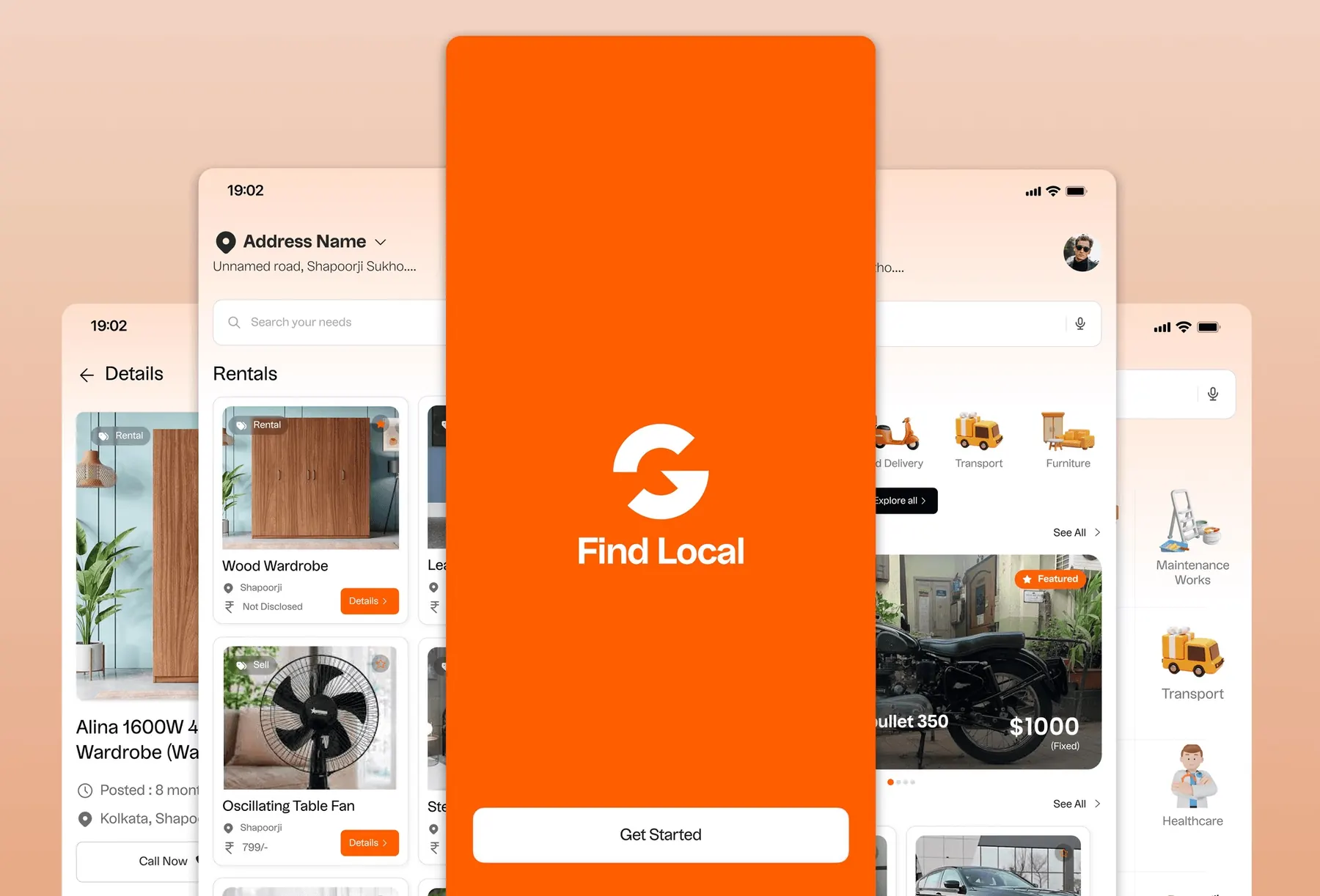
Find Local is a mobile application designed to connect residents within a neighbourhood or housing society through a shared platform for buying, selling, and renting second hand appliances, while also helping them discover local service providers.
The experience combines product listings, category based discovery, direct communication, and built in support tools. By bringing everyday neighbourhood needs into one place, Find Local aims to make local transactions more accessible, organised, and trustworthy.
The Problem
Residents often rely on informal messaging groups, notice boards, and personal contacts to sell or rent used appliances. These channels make it difficult to discover relevant listings, compare available options, and communicate efficiently with potential buyers or sellers.
Finding reliable local help presents a similar challenge. Services such as cleaning, cooking, transportation, and home maintenance are often discovered through scattered recommendations without a consistent way to explore available options. The opportunity was to bring these disconnected activities into a single, community focused experience.
The Approach
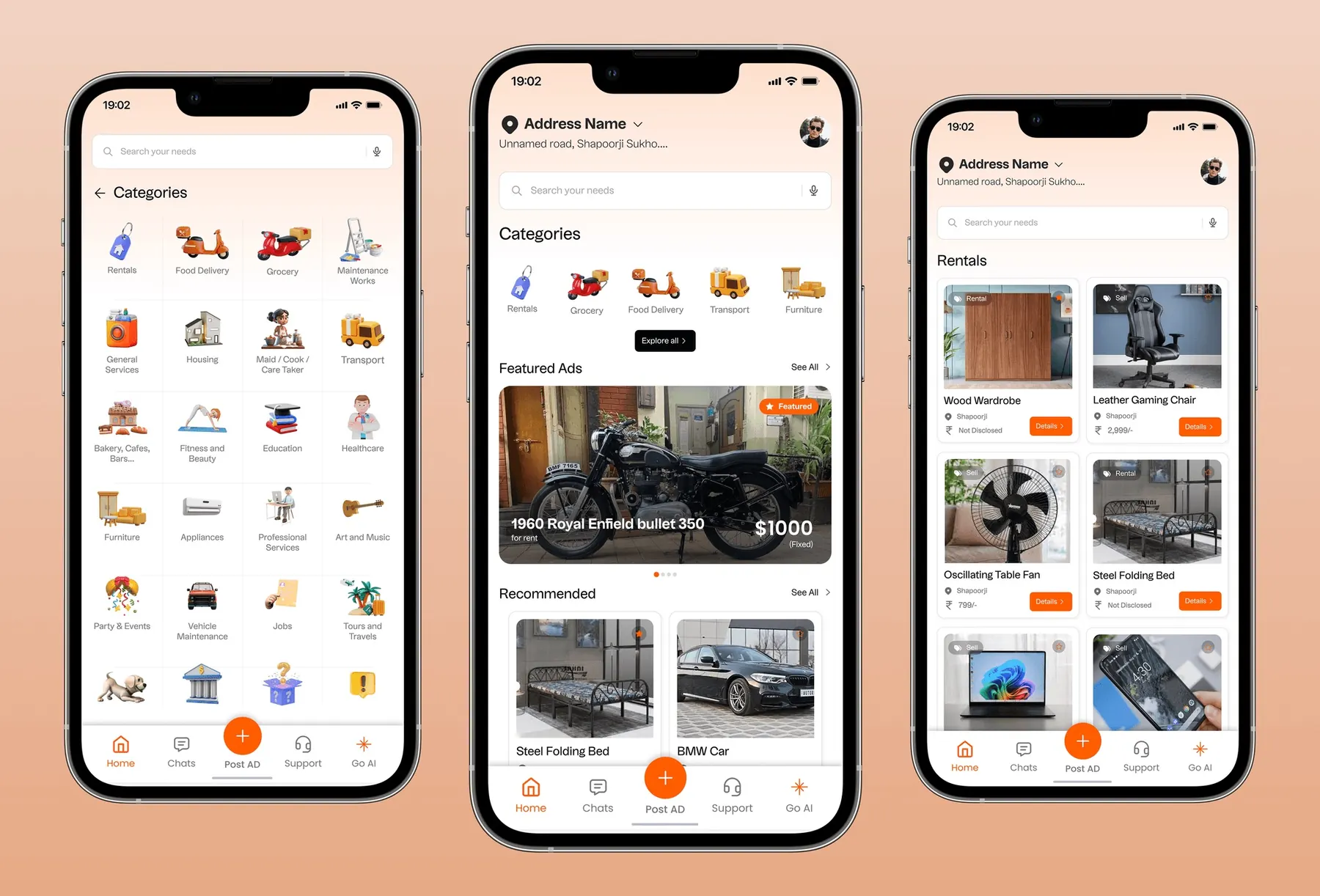
I approached Find Local as a hyperlocal marketplace with two connected purposes: helping residents exchange products and helping them discover everyday services. The interface uses structured categories, searchable listings, featured advertisements, and recommended products to make discovery more intuitive.
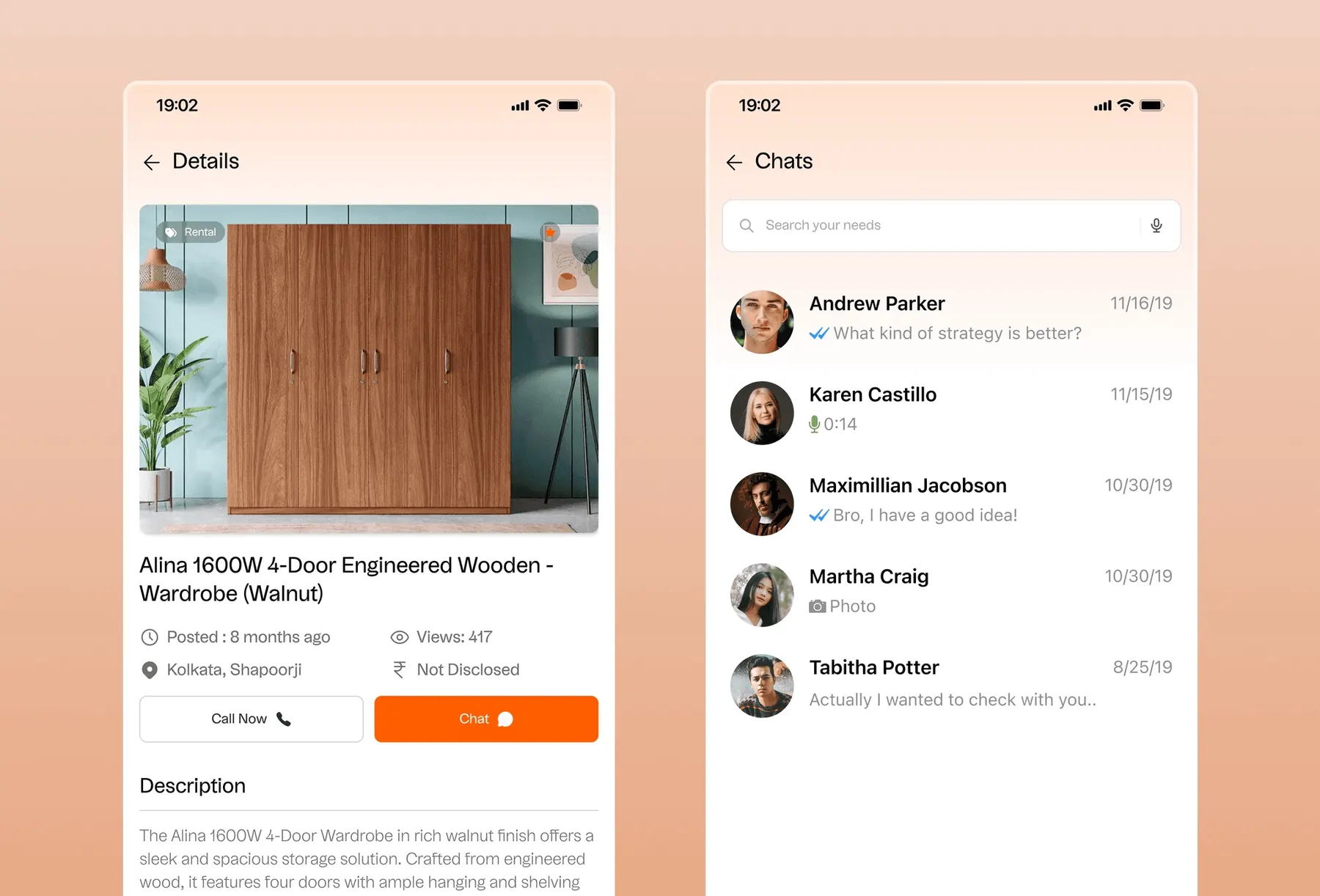
The home screen brings important categories and relevant listings together, while dedicated product detail screens provide information about an item and clear options to call or chat with its owner. Separate communication screens help users manage conversations without losing context about their transactions.
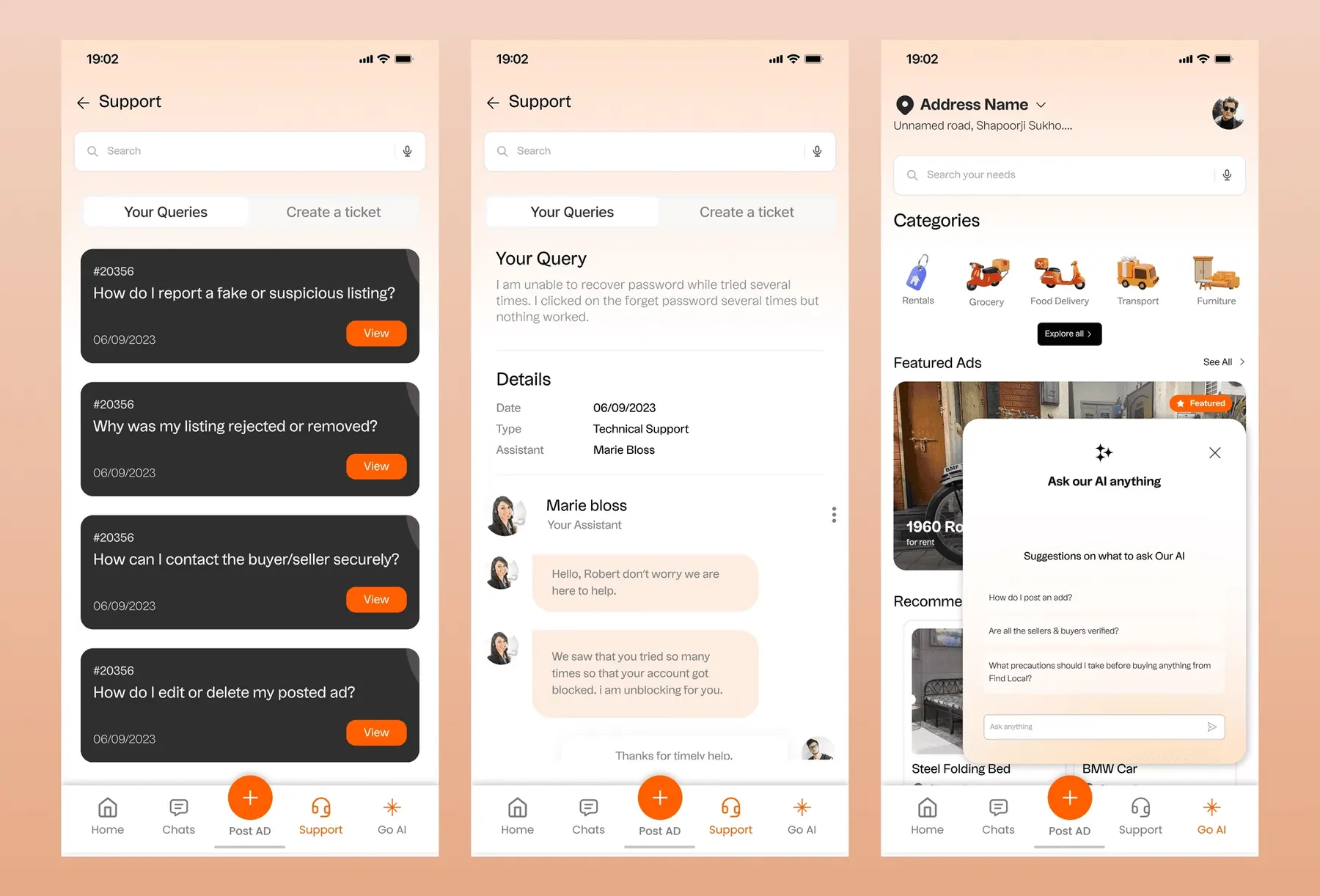
I also designed supporting experiences for customer assistance, query management, and an integrated AI assistant. These features help users navigate the platform, resolve common questions, and access support when something goes wrong. The overall experience prioritises clear navigation and familiar interaction patterns across discovery, transactions, and assistance.
The Results
- A unified marketplace experience for discovering second hand appliances and local services
- More structured product discovery through categories, featured listings, and recommendations
- Direct communication between users through dedicated listing details and chat interfaces
- Integrated support experiences for common questions, user queries, and transaction issues
- A product concept that encourages local reuse and community based economic exchange
What I'd Do Differently
I'd validate the community verification process earlier. While restricting access can help establish trust, every additional step introduces friction before users can publish their first listing or contact another person. Testing this journey with residents would help determine the right balance between safety and accessibility.
I'd also investigate the needs of local service providers more deeply. Residents searching for an appliance and professionals offering cleaning, cooking, or maintenance services have different expectations. Understanding both sides would help shape more appropriate discovery, profile, availability, and communication experiences.
What I Learned
Trust needs to be designed into the experience. In a community marketplace, users need enough information and confidence to contact strangers about products or services. Clear listings, transparent communication, and appropriate verification mechanisms are central to that confidence.
Hyperlocal discovery benefits from relevance over volume. A focused set of listings connected to a user's neighbourhood can be more useful than a large catalogue of unrelated options. Location and category structure therefore play a central role in making the experience feel useful.
A multi purpose product needs clear information architecture. Combining product exchange, service discovery, messaging, and support creates value only when users can understand where each activity belongs. Separating these journeys clearly helps the platform serve different needs without becoming confusing.